
What is already generally known about Legal Tech
Legal Tech connects law, technology and data. Its goal is to make legal services more efficient, simplify administration and provide users with a faster, more accessible and clearer way of working with legal processes.
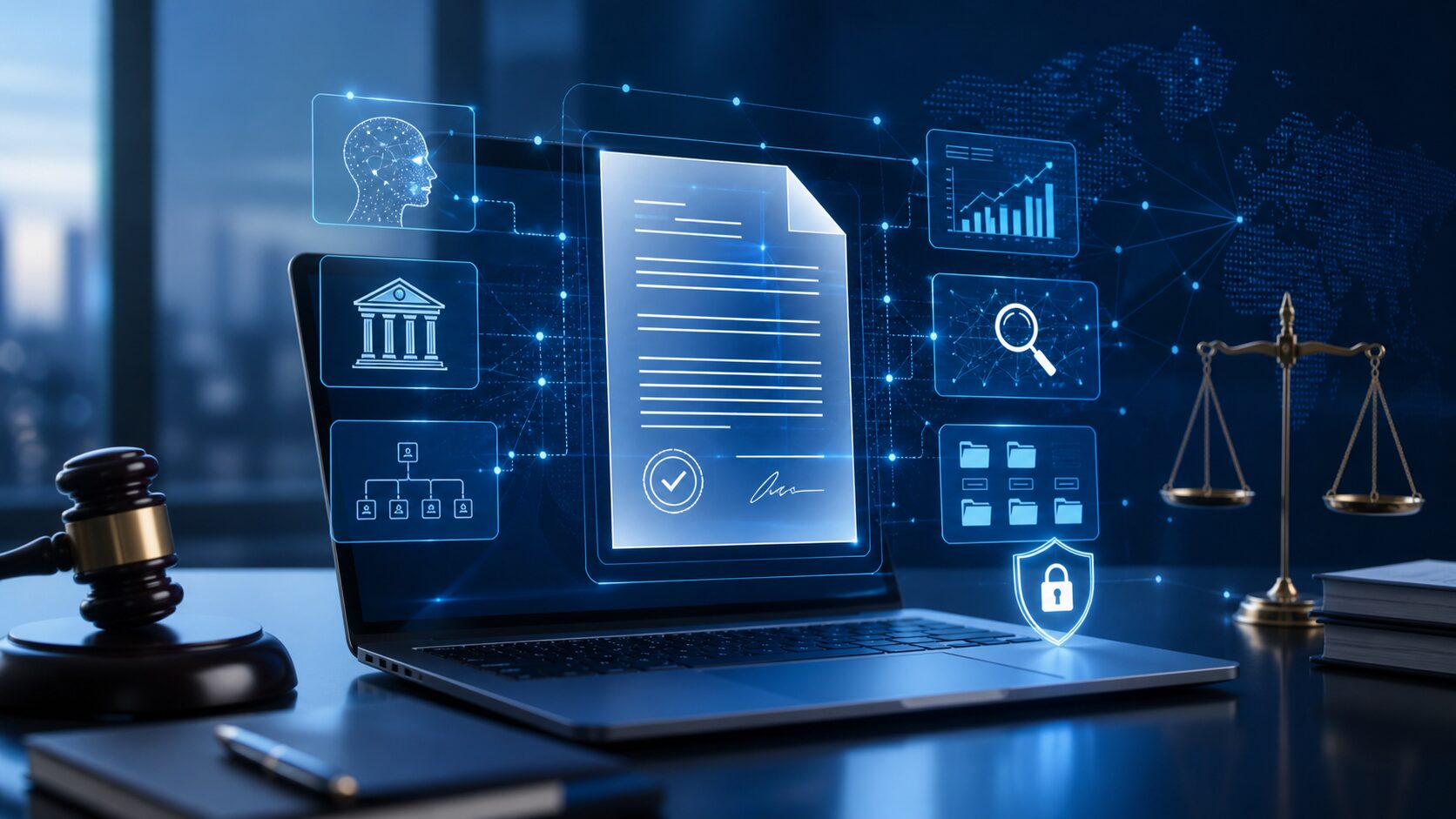
The term Legal Tech refers to the use of modern technologies in the legal environment. It includes solutions that help automate routine legal tasks, work with documents, analyze data and simplify communication between lawyers, companies, public administration and citizens.
In practice, it is not only about digitalizing existing processes. Legal Tech also brings new ways of designing, delivering and managing legal services. Automation, artificial intelligence, data work, electronic signing, workflow tools and intelligent document generation all play an important role.
Legal Tech is not a replacement for legal expertise. It is a tool that can relieve professionals of repetitive tasks and allow them to focus on decision-making, strategy and solving more complex situations.
Document automation
The preparation of contracts, proposals, filings and other documents can be faster, more accurate and less prone to errors.
Working with data
Data from registers, internal systems or documents can be processed into a clear and usable format.
Artificial intelligence
AI helps with text analysis, information search, preparation of materials and decision-making support.
More accessible services
Digital tools can simplify access to legal and administrative services for both companies and citizens.
For companies and public institutions, Legal Tech represents an opportunity to reduce administrative burden, speed up internal processes and improve the quality of outputs. For citizens and clients, it brings easier access to services that were often time-consuming or difficult to understand in the past.
Legal Tech Factory Europe focuses precisely on solutions that connect legal expertise, technology and the practical needs of users. The goal is to create applications that have a real impact on the efficiency, accessibility and quality of legal and administrative processes.